←
Back to Blog
AI
•
•
Team PixelPilot
•
4 min read
Vector Search and RAG Fundamentals
Hands-on guide to vector search and RAG basics for building dependable retrieval systems — from indexing and similarity
Introduction
Modern organizations handle large amounts of information, including documents, emails, reports, and online content. Finding the right information quickly and accurately has become a major challenge. Traditional search tools often rely on exact words, which can miss important context or meaning. Vector search and Retrieval-Augmented Generation, commonly known as RAG, are modern technologies that help systems understand information more naturally and provide better answers.
Understanding Vector Search
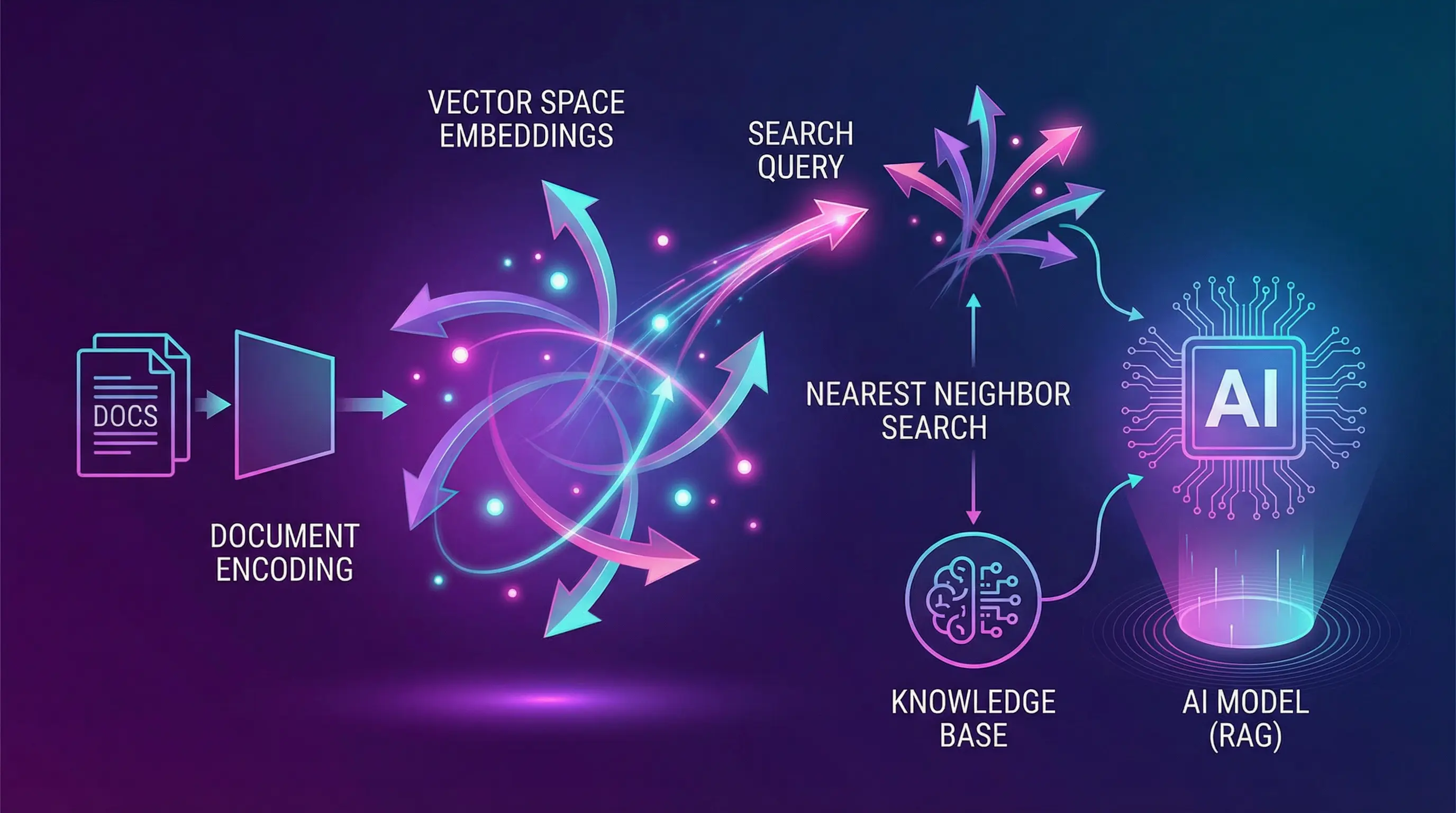
Vector search is a method of finding information based on meaning rather than exact wording. Instead of matching keywords, it converts text, images, or other data into numerical representations called vectors. These vectors capture the meaning of the content.
When a user searches for something, the system compares the meaning of the request with stored vectors and returns the most relevant results. This allows people to find useful information even if they use different words or phrases.
Why Vector Search Is Important
Traditional search engines work well for simple queries but often struggle with complex or vague questions. Vector search improves accuracy by understanding intent and context.
This makes search systems more flexible and human-like. Users spend less time searching and more time acting on the information they find, which improves productivity across organizations.
What Is Retrieval-Augmented Generation (RAG)?
Retrieval-Augmented Generation combines search with artificial intelligence text generation. Instead of relying only on what an AI model already knows, RAG allows the system to retrieve relevant information from trusted data sources before generating a response.
This means answers are grounded in real, up-to-date information. RAG reduces errors, improves accuracy, and provides more reliable outputs compared to standalone AI systems.
How Vector Search and RAG Work Together
Vector search is the foundation that allows RAG to work effectively. When a question is asked, vector search finds the most relevant documents or data based on meaning. RAG then uses that information to generate a clear and accurate response.
This combination ensures that answers are both context-aware and fact-based. It is especially useful for handling complex questions that require understanding large volumes of information.
Use Cases in Business and Industry
Vector search and RAG are used in customer support systems to provide accurate answers from company documentation. They are also used in knowledge management, helping employees quickly find policies, procedures, and best practices.
In research, legal, and financial sectors, these technologies assist professionals by summarizing documents and highlighting relevant insights. This saves time and reduces manual effort.
Improving Accuracy and Trust
One of the biggest advantages of RAG is improved trust. Since answers are generated using verified sources, users can rely on the information provided. This is critical in environments where accuracy and compliance matter.
Organizations can control which data sources are used, ensuring sensitive or outdated information is excluded.
Scalability and Future Growth
As data continues to grow, vector search scales efficiently by organizing information based on meaning rather than rigid structures. RAG systems can be expanded to include new data sources without redesigning the entire system.
This makes them suitable for long-term use and evolving business needs.
Challenges and Considerations
Implementing vector search and RAG requires careful planning. High-quality data, proper security controls, and ongoing maintenance are essential. Organizations must also ensure responsible use of AI, including transparency and data privacy.
Despite these challenges, the long-term benefits often outweigh the initial effort.
Conclusion
Vector search and Retrieval-Augmented Generation represent a major advancement in how systems access and use information. By focusing on meaning and combining retrieval with intelligent generation, these technologies deliver more accurate, useful, and trustworthy results.
As organizations seek smarter ways to manage and understand information, vector search and RAG are becoming foundational tools for modern knowledge systems.
Need help with your digital project?
Our team builds websites, mobile apps, e-commerce platforms and runs data-driven marketing campaigns for businesses across the UK.