←
Back to Blog
AI
•
•
Team PixelPilot
•
3 min read
Time Series Forecasting for Marketing
Turn marketing time series into reliable forecasts: pick the right models, validate with backtests and holdouts, and mon
Introduction
Marketing decisions are increasingly driven by data. Companies track sales, website visits, customer behavior, and campaign performance over time. However, raw data alone is not enough. To plan effectively, marketers need to understand what is likely to happen next. Time series forecasting is a method that helps organizations predict future trends based on past data, allowing marketing teams to make smarter and more confident decisions.
What Is Time Series Forecasting?
Time series forecasting is the process of analyzing data collected over regular time periods, such as daily sales, monthly website traffic, or yearly customer growth. By studying how values change over time, forecasting models can estimate future outcomes.
Unlike one-time analysis, time series forecasting focuses on patterns such as growth, decline, seasonality, and recurring behavior. This makes it especially useful for marketing, where timing and trends play a critical role.
Why Time Matters in Marketing
Marketing performance is strongly influenced by time. Customer demand often changes by season, holidays, or market conditions. For example, retail sales may increase at the end of the year, while travel bookings may peak during certain months.
Time series forecasting helps marketers anticipate these changes instead of reacting to them. With accurate forecasts, teams can prepare campaigns, budgets, and resources in advance.
Key Patterns in Time Series Data
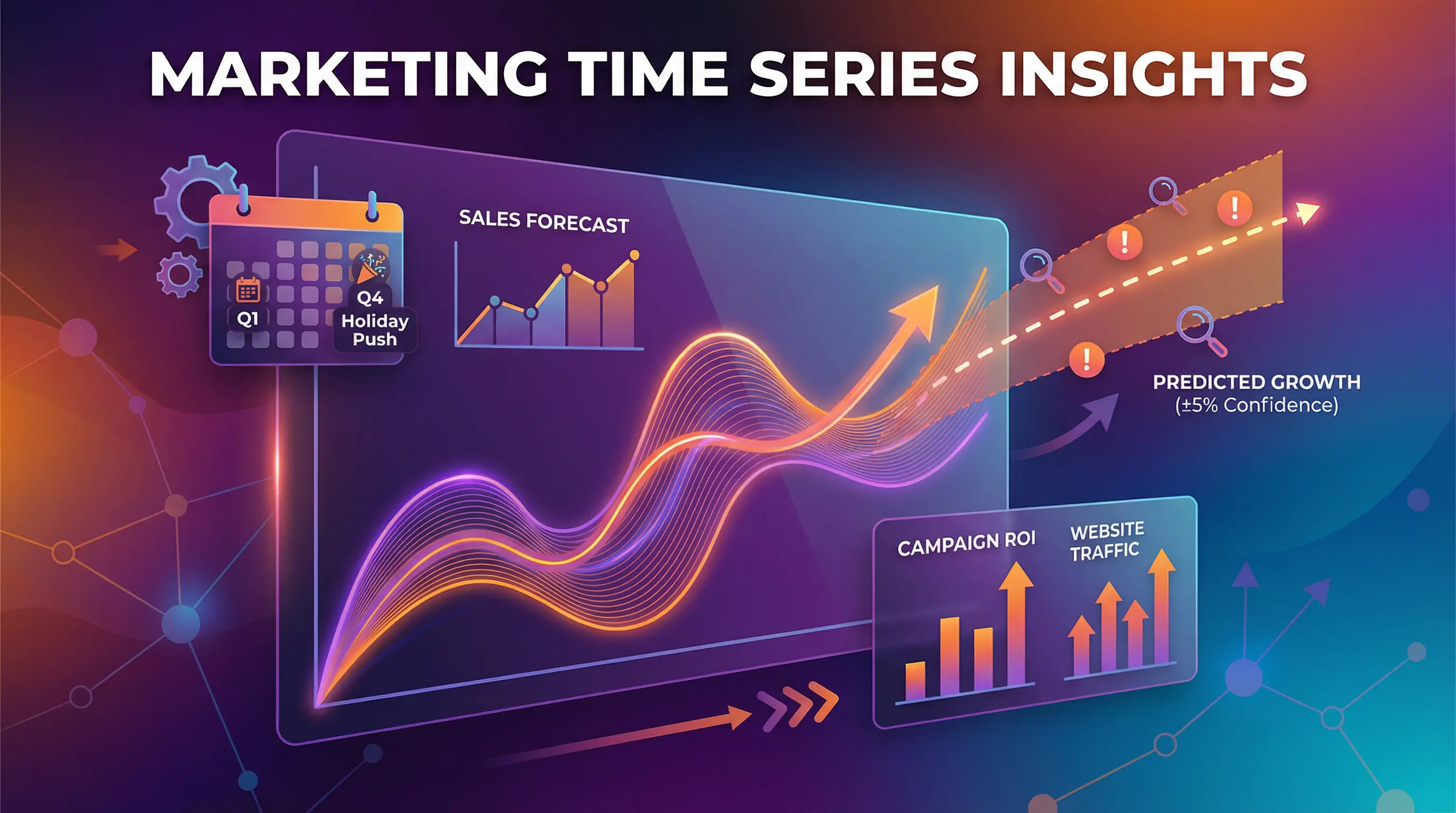
Time series data usually contains several important patterns. Trends show long-term growth or decline, such as increasing brand awareness over years. Seasonality reflects repeating cycles, like higher sales during holidays. Short-term fluctuations capture sudden changes caused by promotions or external events.
Understanding these patterns allows marketing teams to separate normal behavior from unusual results and make better strategic decisions.
Forecasting Marketing Demand
One of the most common uses of time series forecasting in marketing is demand prediction. By analyzing past sales and customer behavior, businesses can estimate future demand for products or services.
This helps marketers align campaigns with expected demand, avoid over-promotion, and ensure that marketing efforts support overall business goals.
Campaign Planning and Budget Optimization
Time series forecasting supports smarter campaign planning. Marketers can predict when engagement is likely to be high and schedule campaigns accordingly. Budgets can be allocated more efficiently by investing more during high-impact periods and reducing spending during low-return times.
This leads to better use of marketing resources and improved return on investment.
Improving Customer Insights
Forecasting also helps understand customer behavior over time. By tracking changes in purchasing patterns, engagement levels, or churn rates, marketers can anticipate shifts in customer needs.
These insights allow teams to personalize messaging, adjust offers, and strengthen long-term customer relationships.
Business Benefits of Forecasting in Marketing
The benefits of time series forecasting extend beyond accuracy. It reduces uncertainty, improves planning, and supports data-driven decision-making. Marketing teams become more proactive and less reactive.
Organizations that use forecasting effectively gain a competitive advantage by responding faster to market changes and customer expectations.
Challenges and Limitations
While powerful, time series forecasting is not perfect. Sudden market disruptions, new competitors, or unexpected events can impact accuracy. Forecasts should be reviewed regularly and combined with human judgment.
Data quality is also critical. Reliable forecasts require consistent, accurate, and relevant historical data.
Conclusion
Time series forecasting is a valuable tool for modern marketing. By analyzing past performance and identifying patterns over time, marketers can anticipate future trends and make informed decisions.
In an environment where timing, efficiency, and customer understanding matter more than ever, time series forecasting helps marketing teams plan with confidence and achieve better results.
Need help with your digital project?
Our team builds websites, mobile apps, e-commerce platforms and runs data-driven marketing campaigns for businesses across the UK.