←
Back to Blog
Cybersecurity
•
•
Team PixelPilot
•
4 min read
Supply Chain Security for Frontend
Scan your frontend package supply chain — spot vulnerable dependencies, pin or lock risky versions, and stop unsafe pack
Introduction
Modern frontend applications such as websites, web apps, and mobile interfaces rely heavily on third-party software. Libraries, frameworks, and packages speed up development and add advanced features. However, this reliance introduces new risks. A vulnerability in any third-party component can compromise the entire application. Supply chain security focuses on protecting applications from these risks and ensuring that software is safe, reliable, and trustworthy.
What Is Frontend Supply Chain Security
Frontend supply chain security means protecting all third-party components and dependencies used in the development of a frontend application. This includes JavaScript libraries, CSS frameworks, build tools, plugins, and developer tools.
The main goal is to prevent malicious code, vulnerabilities, or unauthorized changes from entering the application through these components. A single compromised package can expose sensitive data or disrupt the entire user experience.
Why Supply Chain Security Matters
Supply chain attacks are becoming more common and impactful. Hackers often target widely used packages to reach multiple applications at once. In frontend development, even a small library with harmful code can steal user data, inject unwanted content, or manipulate functionality.
Focusing on supply chain security helps organizations protect users, maintain trust, and avoid costly breaches or regulatory issues.
Key Risks in Frontend Supply Chains
Malicious packages occur when attackers publish a library with harmful code that executes when included in an application. Compromised dependencies happen when a legitimate library is hacked after its release. Unverified sources increase risk when developers use packages from unknown or untrusted origins. Version vulnerabilities are found in older or unpatched versions of libraries that contain security flaws.
Understanding these risks allows teams to prioritize security measures and make safer decisions.
Best Practices for Frontend Supply Chain Security
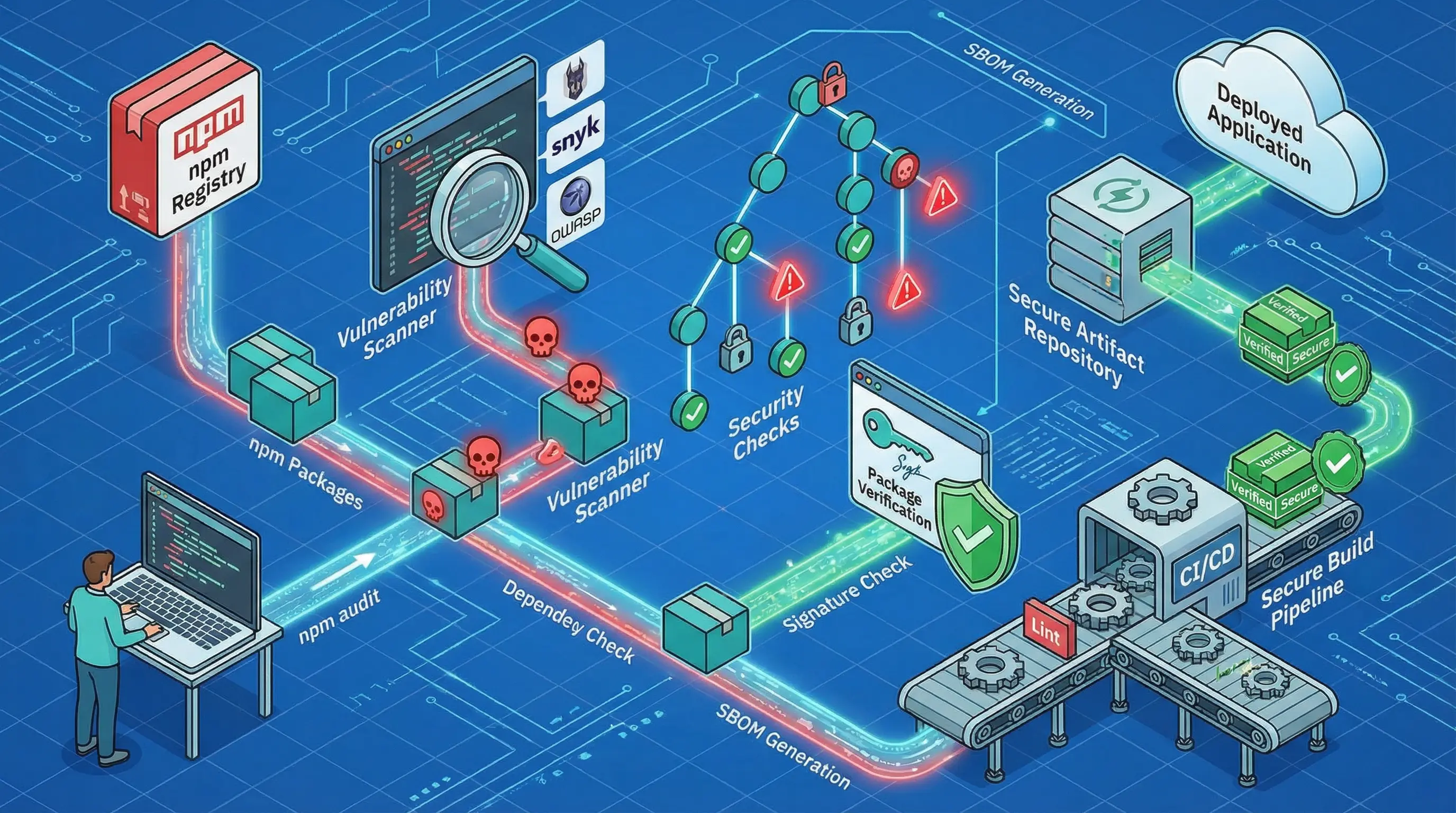
Audit Dependencies Regularly
Teams should check all libraries and frameworks for known vulnerabilities. Tools such as npm audit, Snyk, and Dependabot can automate this process and alert developers when updates are needed.
Use Trusted Sources Only
Packages should only be installed from official repositories and verified sources. Developers should avoid copying code from unknown websites or public forums.
Lock and Monitor Versions
Dependency lock files ensure that all team members and environments use the same package version. Teams should monitor for updates to patch security vulnerabilities quickly.
Implement Code Reviews
Even when using third-party libraries, teams should review critical code changes before integrating them into the application. This review helps detect unusual or unexpected behavior.
Consider Subsetting or Self-Hosting
For critical libraries, teams may use only the necessary components or host them internally. This approach reduces exposure to external risks.
Monitor the Supply Chain Continuously
Supply chain security is an ongoing effort. Teams must continuously monitor for new vulnerabilities, compromised packages, or unexpected behavior.
Collaboration Between Teams
Frontend supply chain security requires collaboration between developers, security teams, and operations teams. Developers implement best practices, security teams provide guidance and monitoring, and operations teams enforce policies. This shared responsibility ensures that security is embedded into the development process.
Business Benefits of Frontend Supply Chain Security
Securing the frontend supply chain protects sensitive user data, maintains brand reputation, and reduces the risk of downtime caused by attacks. Organizations that prioritize supply chain security build customer trust and show commitment to safe and reliable software delivery.
Challenges and Considerations
Implementing supply chain security can be complex. Large applications may have hundreds of dependencies and keeping them all updated requires resources. Some updates may break functionality and require careful testing. Balancing security, functionality, and performance is essential.
Conclusion
Frontend supply chain security is a critical part of modern application development. By carefully managing third-party dependencies, auditing code, and continuously monitoring for vulnerabilities, organizations can protect users and maintain trust.
In today’s interconnected digital ecosystem, supply chain security is not optional. It is essential for building safe, reliable, and resilient frontend applications.
Need help with your digital project?
Our team builds websites, mobile apps, e-commerce platforms and runs data-driven marketing campaigns for businesses across the UK.