←
Back to Blog
Cybersecurity
•
•
Team PixelPilot
•
3 min read
Security Headers That Matter
Deploy and tune essential HTTP security headers, validate their impact in staging, and keep watch on blocked responses a
Introduction
Web applications are exposed to a wide range of online threats. Malicious actors can attempt to steal data, hijack sessions, or exploit vulnerabilities. Security headers are a simple yet powerful tool that web servers can use to instruct browsers on how to handle content safely. Implementing the right security headers strengthens protection, reduces risk, and improves user trust.
What Are Security Headers
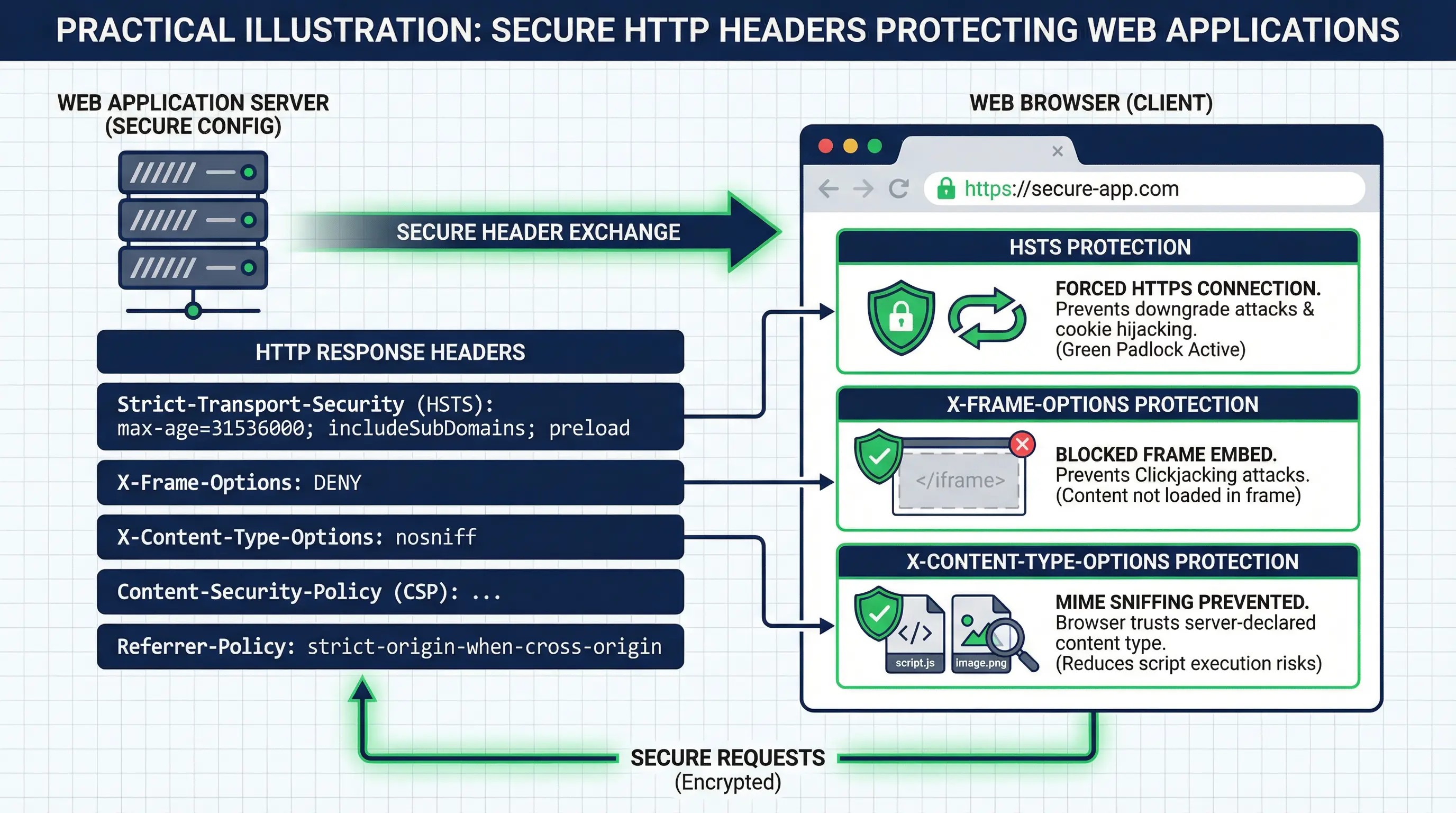
Security headers are instructions sent from a web server to a browser along with web pages. They provide rules on how the browser should handle content, scripts, or connections. While they do not prevent all attacks, security headers serve as an important line of defense against common vulnerabilities.
Key Security Headers
Content Security Policy
Content Security Policy, or CSP, helps prevent cross-site scripting and other code injection attacks. It allows organizations to specify trusted sources for scripts, styles, images, and other content. By restricting which sources are allowed, CSP reduces the risk of malicious code running on a page.
HTTP Strict Transport Security
HTTP Strict Transport Security, or HSTS, forces browsers to use secure HTTPS connections rather than unencrypted HTTP. This prevents attackers from intercepting traffic, protecting sensitive data such as login credentials or personal information.
X-Frame-Options
The X-Frame-Options header prevents clickjacking attacks by controlling whether a page can be embedded in an iframe. This ensures that users cannot be tricked into interacting with hidden malicious content on another website.
X-Content-Type-Options
The X-Content-Type-Options header stops browsers from interpreting files as a different content type than intended. This reduces the risk of content injection attacks where malicious files are disguised as safe content.
Referrer-Policy
The Referrer-Policy header controls how much information about a user’s previous page is shared when navigating to another site. Limiting this information protects user privacy and sensitive data from being exposed to third parties.
Permissions-Policy
The Permissions-Policy header manages access to powerful browser features such as camera, microphone, or location. Restricting these permissions reduces the risk of unauthorized access and misuse of sensitive device capabilities.
Benefits of Security Headers
Implementing security headers improves the overall security posture of web applications. They provide protection against common attacks, safeguard user data, and demonstrate a commitment to security best practices. Security headers are also relatively easy to configure and maintain, making them a cost-effective measure.
Implementation Considerations
Configuring security headers requires careful planning. Each header must be set correctly to avoid breaking legitimate functionality. Testing and monitoring are essential to ensure headers are applied consistently across all pages. Security headers should also be reviewed regularly to adapt to evolving threats and browser standards.
Challenges
While security headers enhance protection, they are not a complete solution. Organizations must use them alongside other security practices such as secure coding, authentication controls, encryption, and monitoring. In some cases, headers may conflict with legacy systems or third-party integrations, requiring adjustments or exceptions.
Conclusion
Security headers play a crucial role in web application defense. By implementing headers such as Content Security Policy, HTTP Strict Transport Security, X-Frame-Options, and others, organizations can mitigate common vulnerabilities, protect user data, and improve trust.
For modern web applications, security headers are a foundational practice that complements broader security strategies, helping teams build safer and more resilient online experiences.
Need help with your digital project?
Our team builds websites, mobile apps, e-commerce platforms and runs data-driven marketing campaigns for businesses across the UK.