←
Back to Blog
Cybersecurity
•
•
Team PixelPilot
•
3 min read
Secure Authentication and Session Management
Lock down authentication flows and tighten session controls: set sensible token lifetimes, define logout semantics, and
Introduction
Authentication and session management are critical components of web and mobile applications. Authentication ensures that users are who they claim to be, while session management controls how users stay logged in and interact with the system securely. Poor implementation can lead to unauthorized access, data breaches, and compromised user trust.
Understanding Authentication
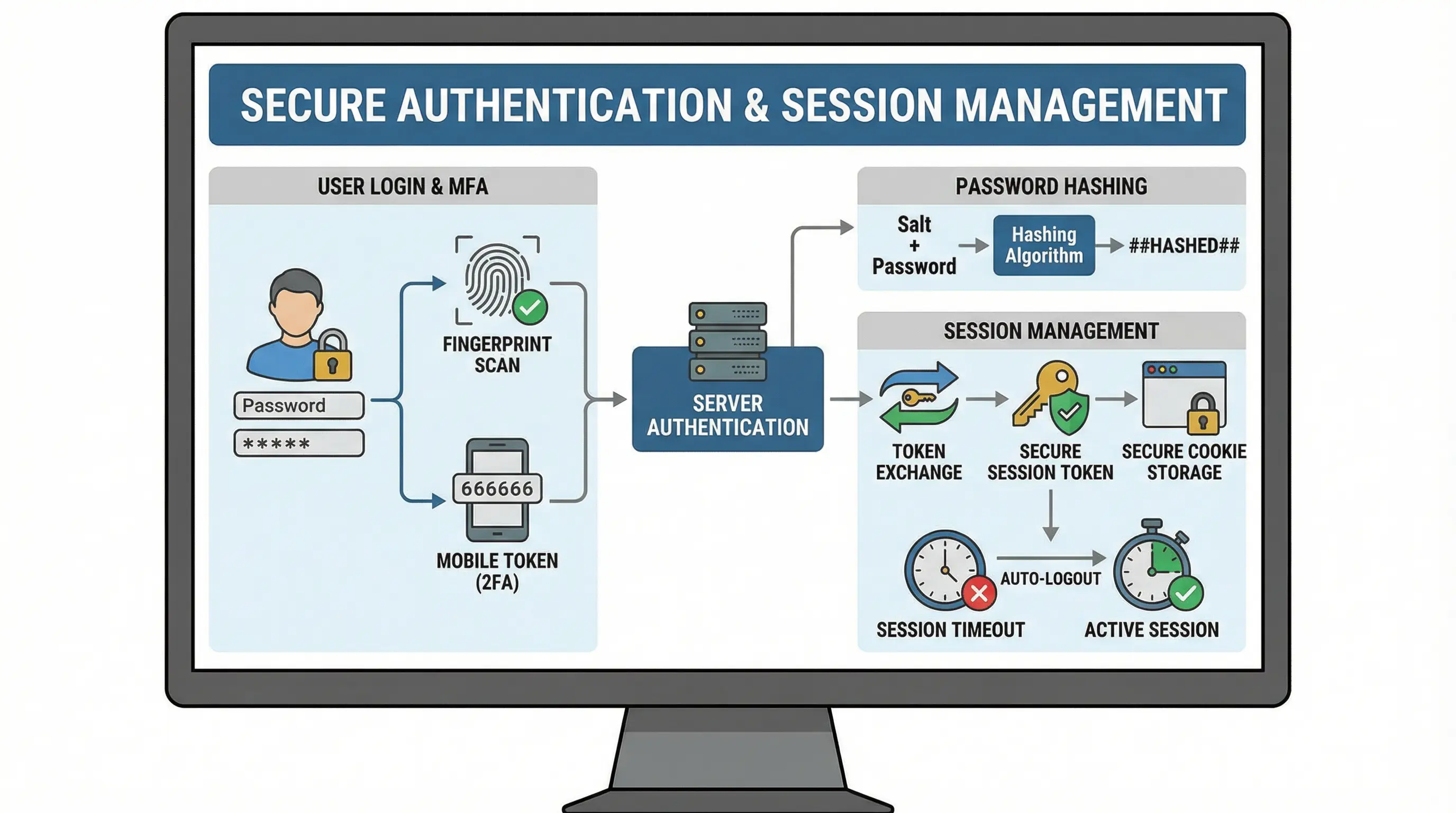
Authentication is the process of verifying a user’s identity. Common methods include passwords, multi-factor authentication, biometric verification, and authentication tokens. Secure authentication ensures that only legitimate users can access an application and prevents attackers from impersonating users.
Password Best Practices
Passwords are the most common authentication method. Strong passwords should be long, unique, and complex, combining letters, numbers, and symbols. Storing passwords securely using hashing and salting prevents attackers from easily accessing them in case of a breach.
Multi-Factor Authentication
Multi-factor authentication adds an extra layer of security by requiring users to provide two or more forms of verification. This can include a password plus a one-time code, fingerprint, or authentication app. Multi-factor authentication significantly reduces the risk of unauthorized access.
Understanding Session Management
Once a user is authenticated, session management ensures that their interaction with the application remains secure. Sessions track user activity and maintain their authenticated state without requiring repeated logins. Proper session management prevents attackers from hijacking sessions and gaining unauthorized access.
Secure Session Practices
Use unique session identifiers for each user.
Transmit session tokens over encrypted channels such as HTTPS.
Set session expiration times to automatically log out inactive users.
Store session tokens securely and avoid exposing them in URLs.
Implement server-side session validation to detect anomalies.
Protecting Against Common Threats
Secure authentication and session management protect against several common threats, including:
Credential theft: Protecting passwords and using multi-factor authentication prevents unauthorized access.
Session hijacking: Encrypting session tokens and validating them server-side reduces the risk of attackers stealing active sessions.
Brute force attacks: Limiting login attempts and monitoring unusual activity prevents attackers from guessing passwords.
Cross-site scripting attacks: Proper input validation and content security policies prevent malicious scripts from stealing session information.
Business Benefits
Implementing secure authentication and session management enhances user trust and protects sensitive information. It reduces the risk of financial loss, regulatory fines, and reputational damage. Secure practices also make applications more resilient and easier to maintain.
Challenges and Considerations
Balancing security with user convenience can be challenging. Overly strict measures may frustrate users, while weak practices can lead to breaches. Organizations must carefully design authentication flows, session policies, and monitoring systems to maintain security without compromising usability.
Conclusion
Secure authentication and session management are essential for protecting users and maintaining trust in digital applications. By implementing strong passwords, multi-factor authentication, secure session handling, and proactive threat protection, organizations can safeguard sensitive data and reduce the risk of unauthorized access.
Strong authentication and session management are foundational security practices that support the overall integrity, reliability, and safety of modern web and mobile applications.
Need help with your digital project?
Our team builds websites, mobile apps, e-commerce platforms and runs data-driven marketing campaigns for businesses across the UK.