←
Back to Blog
Web design
•
•
Team PixelPilot
•
4 min read
Landing Pages That Convert Consistently
Test landing-page flows, A/B copy swaps, and conversion funnel fixes.
Introduction
A landing page is often the first interaction a user has with your product, service, or campaign. Unlike a homepage, which serves multiple purposes, a landing page has a singular goal: to convert visitors into leads, customers, or subscribers. Consistently high-performing landing pages can dramatically increase conversions, reduce acquisition costs, and improve return on investment for marketing campaigns.
Building landing pages that convert requires a combination of design, copywriting, user experience, and analytics. Understanding what motivates users, reducing friction, and providing clarity are key to consistent success.
Defining Conversion Goals
Clarity of Purpose
Before designing a landing page, it’s essential to define the desired action. Conversion goals may include:
Submitting a lead form
Downloading an eBook or resource
Signing up for a newsletter or trial
Making a purchase
Scheduling a consultation or demo
Every element on the page should guide the user toward this single goal. Ambiguity reduces conversion rates.
Aligning With Campaign Messaging
Landing pages must reflect the promises made in marketing campaigns. Whether from paid ads, emails, or social media, the messaging should be consistent. Misalignment leads to confusion and high bounce rates.
Key Elements of High-Converting Landing Pages
Compelling Headlines
The headline should immediately communicate value
Focus on benefits rather than features
Keep it concise, clear, and attention-grabbing
Persuasive Copy
Highlight pain points and present your solution clearly
Use simple, scannable text with bullet points or short paragraphs
Include social proof such as testimonials, case studies, or reviews
Strong Call-to-Action (CTA)
Make CTAs prominent with contrasting colors and clear language
Action-oriented phrases like “Get Started,” “Download Now,” or “Claim Your Free Trial” work best
Place CTAs above the fold and repeat them for long pages
Visual Design
Minimalist design reduces distractions and focuses attention on the CTA
Use high-quality images, illustrations, or videos to demonstrate product value
Ensure mobile responsiveness and fast load times
Trust and Credibility
Display customer logos, certifications, awards, or security badges
Include privacy statements for forms and clear terms of service
Testimonials and real-world results improve confidence in the offer
User Experience and Navigation
Simplifying Forms
Limit the number of fields to reduce friction
Use inline validation and helpful tooltips
Auto-fill features and progressive profiling improve completion rates
Page Speed and Performance
Fast-loading pages reduce bounce rates and increase conversions
Optimize images, scripts, and hosting for speed
Use lazy loading and caching where appropriate
Mobile Optimization
Ensure the landing page is fully responsive and touch-friendly
Prioritize above-the-fold content for smaller screens
Test CTAs for ease of clicking on mobile devices
Testing and Optimization
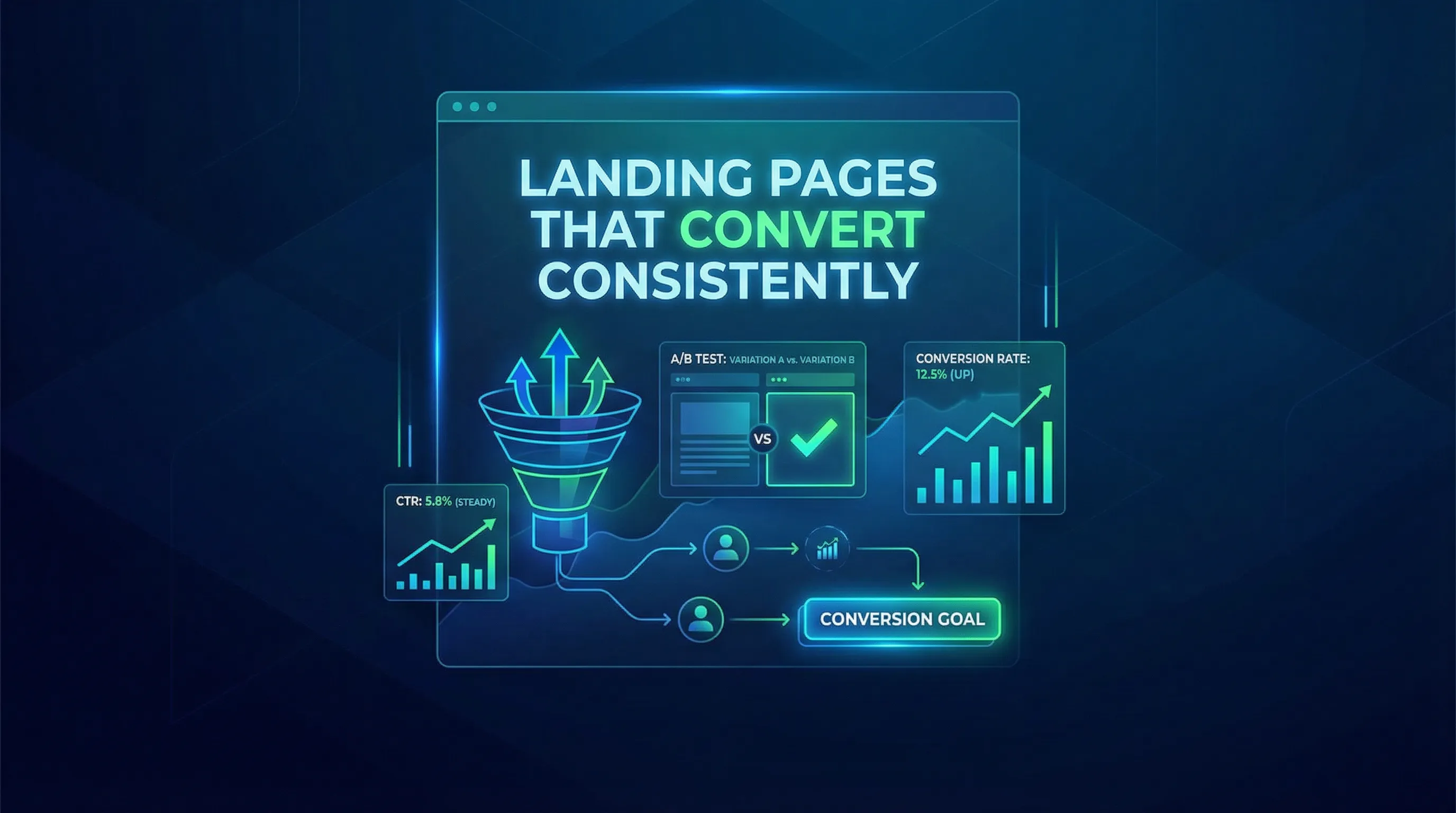
A/B Testing
Test variations of headlines, CTAs, images, and copy to identify what converts best
Measure conversions, bounce rates, and engagement metrics
Heatmaps and Session Recordings
Tools like Hotjar or Crazy Egg reveal how users interact with pages
Identify friction points, scroll behavior, and click patterns
Analytics and Metrics
Track conversion rate, click-through rate, form submissions, and revenue generated
Segment users by source, device, and campaign to uncover actionable insights
Use GA4 or other analytics tools to tie landing page performance to business outcomes
Advanced Conversion Strategies
Personalization
Dynamic content based on user location, behavior, or referral source improves relevance
Personalized messaging can significantly increase engagement
Social Proof and Urgency
Display live counters, limited-time offers, or recently sold notifications
Highlight testimonials or success stories that resonate with the target audience
Exit-Intent Strategies
Use pop-ups or overlays triggered by exit behavior to capture abandoning users
Offer discounts, free resources, or reminders to stay engaged
Maintaining Consistency
Maintain consistent branding, tone, and design across landing pages
Develop templates and guidelines for efficiency and scalability
Conduct periodic audits to ensure pages remain relevant, functional, and aligned with campaigns
Business Benefits
Landing pages optimized for consistent conversion deliver measurable business results:
Higher ROI on marketing spend: More conversions from existing traffic
Better lead quality: Targeted pages attract the right audience
Reduced acquisition costs: Efficient pages require fewer ad impressions for the same outcome
Enhanced user experience: Clear messaging and frictionless interaction improve trust and engagement
Challenges and Considerations
Balancing simplicity and information: Too little content may confuse users; too much may overwhelm
Designing for multiple audience segments requires careful personalization
Maintaining speed, security, and accessibility while using rich media or interactive elements
Continuous testing and iteration are required to keep conversion rates high
Conclusion
Landing pages that convert consistently are the result of clarity, focus, and data-driven optimization. By defining clear goals, designing compelling experiences, and continuously testing and refining elements, organizations can maximize the impact of their marketing campaigns and drive measurable business outcomes.
Consistently high-performing landing pages not only increase conversions but also build trust, improve user experience, and strengthen brand credibility. In competitive digital markets, they are an essential tool for growth-focused teams.
Need help with your digital project?
Our team builds websites, mobile apps, e-commerce platforms and runs data-driven marketing campaigns for businesses across the UK.