←
Back to Blog
Emerging Tech
•
•
Team PixelPilot
•
4 min read
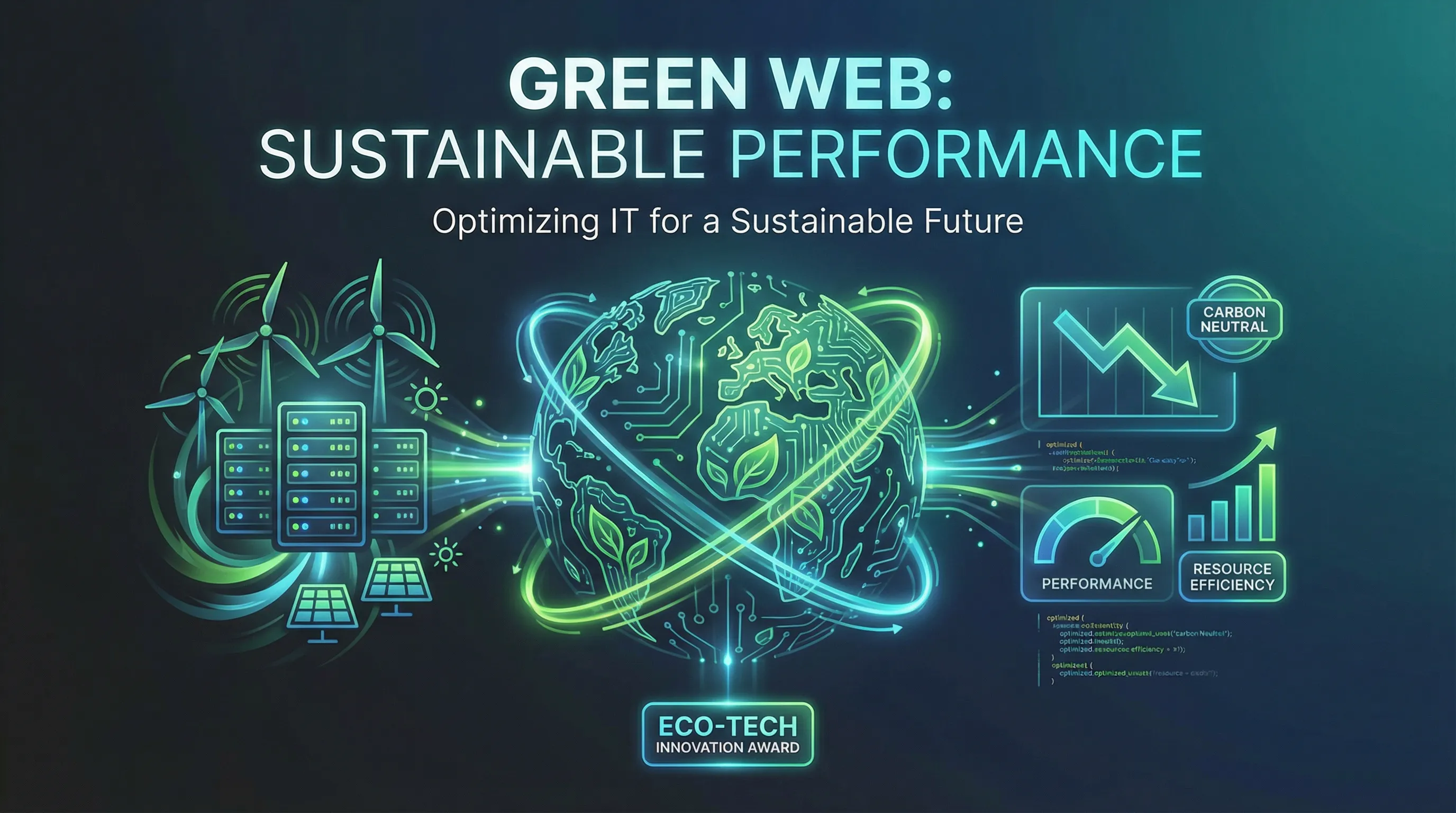
Green Web: Sustainable Performance
Measure sustainable performance and shrink your page's carbon footprint with clear metrics and quick, practical wins.
Introduction
A green web blends high-performing websites with environmental responsibility. As global digital activity grows, data centers, servers, and content delivery networks consume significant energy. A site's performance—its speed, efficiency, and optimization—directly affects energy use and its carbon footprint.
Sustainable web practices are more than a moral choice—they enhance user experience, page speed, SEO, and operational efficiency. Focusing on sustainable performance lets organizations reduce environmental impact while delivering better digital experiences.
Understanding the Green Web
Why It Matters
Energy consumption: Hosting, streaming, and data transfer consume electricity, much of it still from non-renewable sources
Carbon footprint: Every page view carries associated CO₂ emissions; inefficient sites raise that impact
Regulatory and brand pressure: Governments and customers increasingly expect businesses to cut digital environmental impact
Core Principles
Efficient design: Fewer, optimized resources lower energy use
Fast performance: Pages that load quickly use less server and network energy
Sustainable hosting: Choosing renewable-powered or carbon-neutral infrastructure
Strategies for Sustainable Website Performance
Optimize Front-End Resources
Minify and compress CSS, JavaScript, and HTML
Optimize images and videos with modern formats (WebP, AVIF)
Use lazy loading for non-critical resources
Reduce unnecessary animations and scripts
Efficient Hosting and Infrastructure
Choose green hosting providers powered by renewable energy
Use content delivery networks (CDNs) to lower latency and reduce energy use
Enable server-side and edge caching to avoid repeated data transfers
Performance-Driven Design
Favor lightweight layouts and minimal resource use
Prioritize above-the-fold content to improve perceived load times
Use responsive design to deliver only the assets each device needs
Carbon-Aware Analytics
Track performance metrics alongside estimated energy use and CO₂ emissions
Use tools like Website Carbon Calculator to assess environmental impact
Set targets to reduce both page weight and carbon footprint over time
Sustainable UX and Content Practices
Minimalist Design
Remove redundant elements and visual clutter
Focus on essential content that drives action
Smaller pages load faster, use less energy, and improve user experience
Efficient Media
Compress images and video without losing clarity
Avoid autoplay videos or background animations that increase resource use
Serve media conditionally based on device and network capabilities
Accessibility and Sustainability
Accessible websites often rely less on heavy scripts and complex resources, supporting sustainability
Optimized fonts, layouts, and color choices reduce computational load
Monitoring and Continuous Improvement
Performance Audits
Regularly test pages with Lighthouse, PageSpeed Insights, or WebPageTest
Track metrics like Total Page Size, Server Requests, and Largest Contentful Paint
Sustainability Metrics
Estimate CO₂ emissions per page view
Monitor progress over time, aligning performance improvements with environmental goals
Iterative Optimization
Continuously refresh images, scripts, and hosting approaches
Remove unused assets and automate optimization during content publishing
Business Benefits of Green Web Practices
Improved user experience: Faster, lighter pages boost engagement and lower bounce rates
SEO advantages: Search engines favor fast-loading sites and strong Core Web Vitals
Brand credibility: Demonstrating environmental responsibility builds trust with users and partners
Operational efficiency: Optimized sites use less bandwidth and server capacity, cutting costs
Regulatory alignment: Positions organizations for sustainability reporting and compliance
Challenges and Considerations
Balancing rich media with sustainability goals
Managing legacy systems or CMSs that produce heavy code
Coordinating responsibilities across design, development, and operations
Educating stakeholders on the long-term value of sustainable performance
Future of the Green Web
AI-powered optimization for resource-efficient design and delivery
Adoption of carbon-aware hosting and smart traffic routing based on energy sources
Integration of sustainability KPIs into standard performance dashboards
Consumer expectations for eco-friendly digital products will drive broader adoption
Conclusion
A green web is more than environmental responsibility—it’s about building faster, lighter, and more efficient websites. By combining sustainable design, optimized performance, and renewable-powered infrastructure, organizations can cut carbon footprint, improve user experience, and meet business goals at the same time.
High-performance sustainable websites benefit both users and the planet, making green web practices a strategic priority for 2026 and beyond.
Need help with your digital project?
Our team builds websites, mobile apps, e-commerce platforms and runs data-driven marketing campaigns for businesses across the UK.