←
Back to Blog
AI
•
•
Team PixelPilot
•
3 min read
Embedding Strategies for Content
Create content embeddings, build indexed vector stores, and measure relevance across search and recommendation use cases
Introduction
In the age of AI and machine learning, embeddings have become a critical tool for understanding, organizing, and retrieving content. An embedding is a numerical representation of text, images, or other data, capturing semantic meaning in a way that machines can process.
Embedding strategies allow organizations to improve search, recommendations, personalization, and content analysis. Properly implemented, embeddings enhance user experience, content discoverability, and operational efficiency across digital platforms.
Understanding Content Embeddings
What Are Embeddings?
Embeddings are vectors in a multi-dimensional space that encode semantic information
Similar content is mapped to closely related points, enabling similarity comparisons
Used in tasks such as semantic search, clustering, and recommendation systems
Example: Two product descriptions about “wireless headphones” will have similar embeddings, even if the text uses slightly different wording.
Why Embeddings Matter
Enable semantic search beyond exact keyword matching
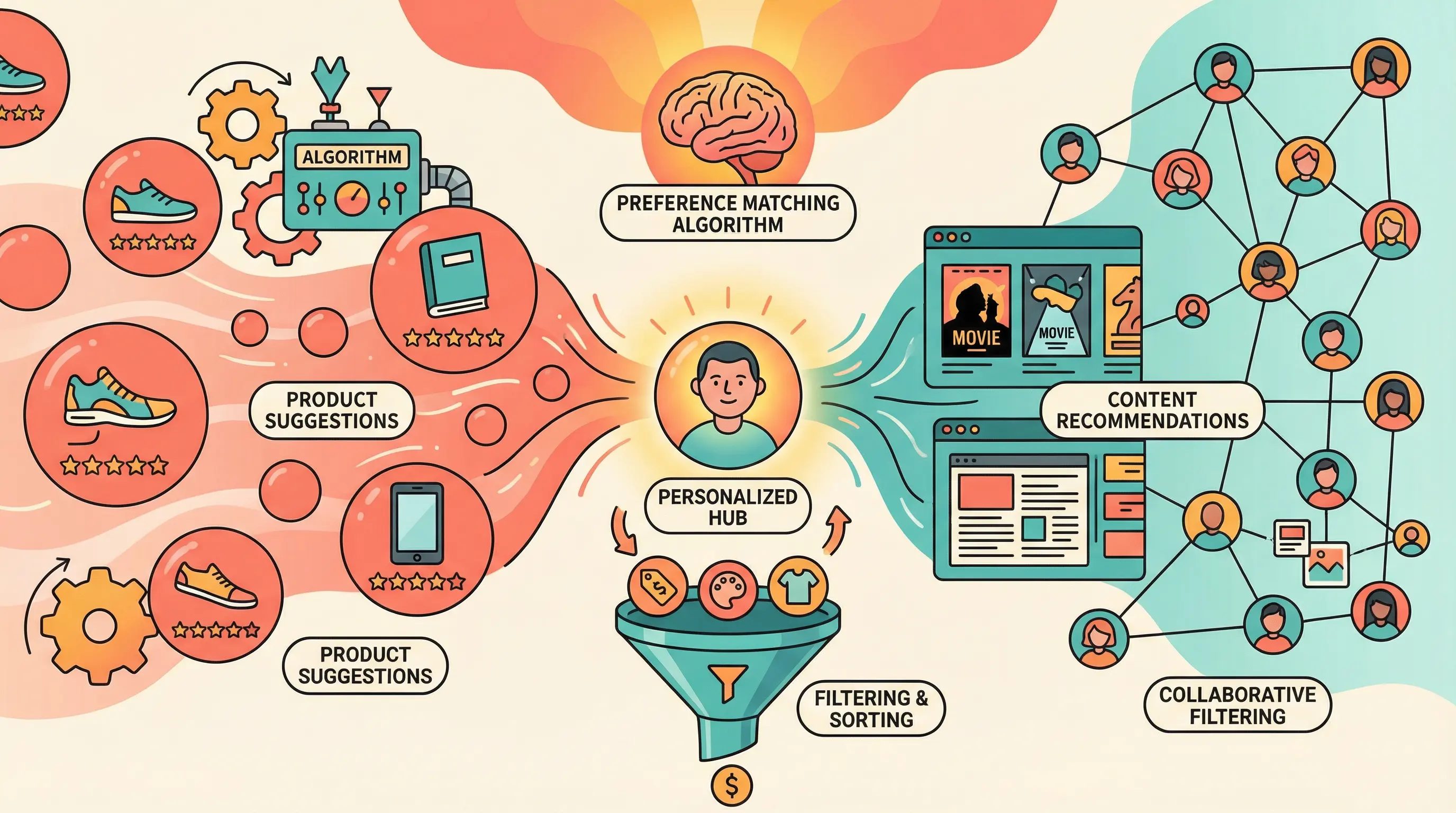
Power recommendation engines that suggest relevant content
Facilitate content organization and topic clustering
Support machine learning workflows for personalization and analytics
Embedding Strategies
1. Pre-trained Embeddings
Use embeddings from models trained on large datasets (e.g., OpenAI, BERT, or Sentence Transformers)
Pros: Fast to deploy, strong semantic understanding
Cons: May not capture domain-specific nuances
Use Case: Customer support articles, FAQs, or general content discovery
2. Domain-Specific Fine-Tuned Embeddings
Fine-tune embeddings on your own content or data for specialized use cases
Pros: Improved relevance and context awareness
Cons: Requires labeled data and additional compute resources
Use Case: Legal documents, medical literature, or internal company knowledge
3. Hybrid Embeddings
Combine general-purpose embeddings with domain-specific adjustments
Achieves balance between general understanding and context-specific accuracy
Use Case: Ecommerce platforms where general search is combined with product-specific relevance
Embedding Workflows for Content
Data Preparation
Clean and normalize text (remove HTML, stopwords, irrelevant formatting)
Segment content into meaningful chunks or passages
Tag content with metadata for filtering and retrieval
Embedding Generation
Use appropriate embedding models depending on task complexity and domain
Generate embeddings for both existing and new content
Storage and Retrieval
Store embeddings in a vector database (e.g., Pinecone, Weaviate, or Milvus)
Ensure efficient similarity search using approximate nearest neighbor (ANN) techniques
Combine embeddings with metadata for contextual filtering
Integration with Applications
Semantic search: Users find content based on meaning, not just keywords
Recommendation systems: Suggest related articles, products, or media
Content clustering: Automatically organize content into thematic groups
Personalization: Match content to user preferences or historical interactions
Best Practices for Embedding Strategies
Choose the right model for your domain: General-purpose models are good for broad content; fine-tuned models improve domain relevance
Monitor vector similarity quality: Periodically validate that embeddings capture intended relationships
Chunk content appropriately: Too large reduces semantic precision; too small increases storage and retrieval complexity
Combine embeddings with metadata: Enhances filtering, faceted search, and compliance with user requirements
Optimize performance: Use ANN algorithms and indexing for fast retrieval on large datasets
Business Benefits
Enhanced content discovery: Users find relevant information faster
Increased engagement: Personalized recommendations improve interaction and retention
Operational efficiency: Reduces manual tagging and content management effort
Better insights: Embeddings enable clustering and analysis for strategic decision-making
Challenges and Considerations
Scalability: Large content libraries require efficient vector storage and retrieval
Cost: Generating and storing embeddings can be resource-intensive
Data freshness: Ensure embeddings are updated as content evolves
Bias and quality: Embeddings reflect the data they were trained on; monitor for unwanted bias or irrelevant clustering
Conclusion
Embedding strategies are a foundational tool for modern content systems. By leveraging pre-trained, fine-tuned, or hybrid embeddings, organizations can unlock semantic search, recommendations, personalization, and advanced analytics.
A strategic embedding implementation ensures that content is more discoverable, relevant, and actionable, driving engagement, improving user experience, and enabling smarter business decisions.
Need help with your digital project?
Our team builds websites, mobile apps, e-commerce platforms and runs data-driven marketing campaigns for businesses across the UK.