←
Back to Blog
Web design
•
•
Team PixelPilot
•
4 min read
Editorial Calendars that Deliver Weekly
Plan weekly editorial calendar slots and enforce publishing cadence.
Introduction
Consistency is key to building an engaged audience, improving SEO, and supporting business goals. An editorial calendar is a structured plan that schedules content creation, publication, and promotion.
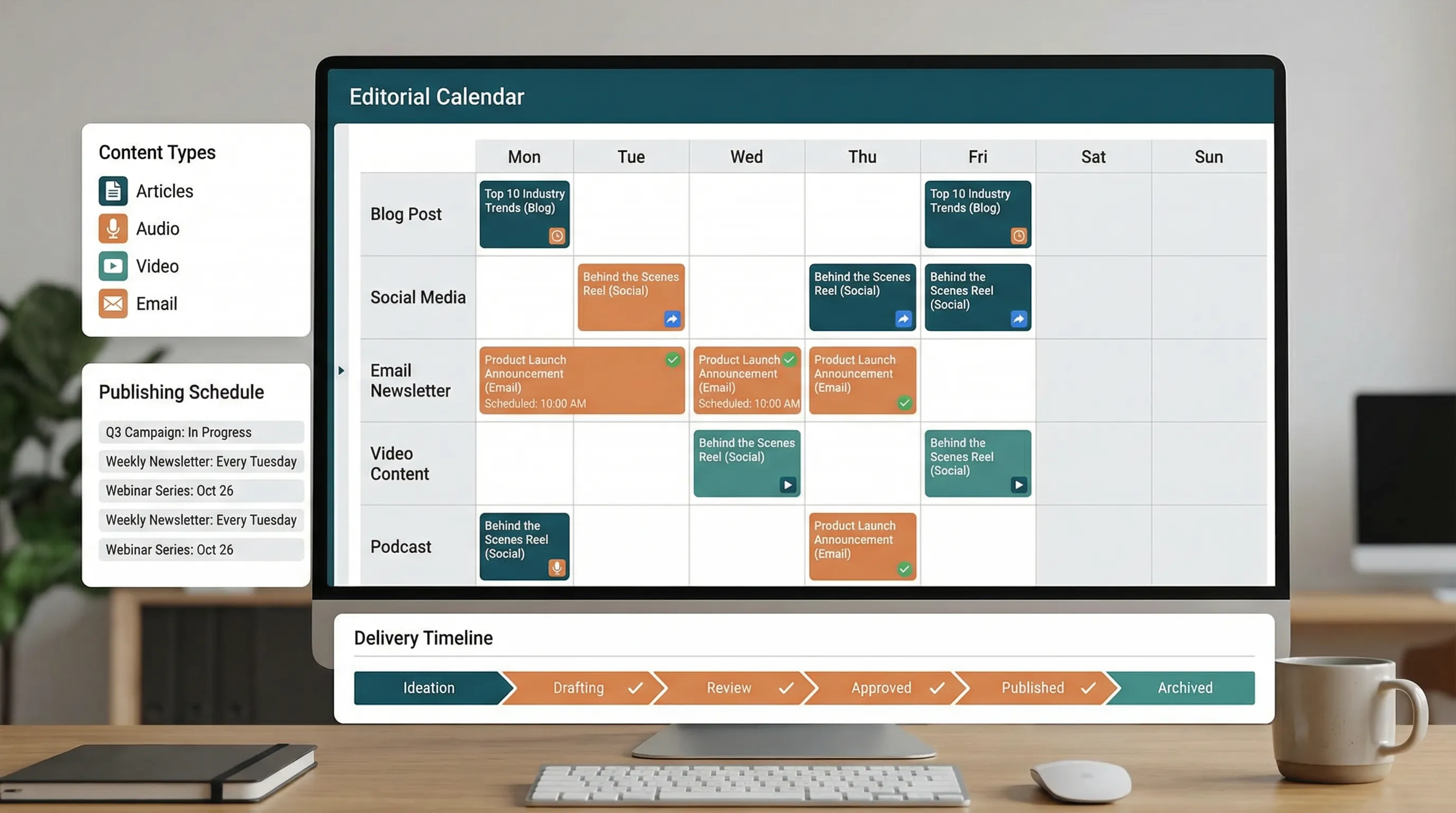
Creating a calendar that delivers content weekly requires strategic planning, clear workflows, and coordination across teams. A well-managed editorial calendar ensures that your content is timely, relevant, and aligned with your brand objectives.
Why Weekly Delivery Matters
Audience Engagement
Regular, predictable content keeps audiences returning
Builds trust and authority in your niche
Supports social media sharing and multi-channel promotion
SEO and Discoverability
Frequent content updates signal freshness to search engines
Helps target long-tail keywords over time
Improves internal linking opportunities across content
Team Efficiency
Clear schedules reduce last-minute rushes
Ensures resources are allocated effectively across writing, design, and review
Prevents burnout by balancing workload across weeks
Key Components of a Weekly Editorial Calendar
1. Content Themes and Topics
Define overarching themes for each month or quarter
Identify weekly topics that align with audience interests and business goals
Include seasonal, industry-specific, or trending topics
2. Content Types
Diversify formats: blog posts, videos, infographics, podcasts, newsletters
Assign types to specific days to ensure variety and engagement
Include evergreen content for long-term SEO value
3. Roles and Responsibilities
Assign writers, editors, designers, and social media managers
Clarify deadlines for drafts, reviews, and final approvals
Document who is responsible for posting and promotion
4. Workflow and Tools
Use tools like Trello, Asana, Notion, or Airtable to track progress
Create columns or stages: Idea → Draft → Review → Scheduled → Published
Integrate with content management systems (CMS) for seamless scheduling
5. Publication Schedule
Choose consistent days and times for publishing
Consider audience behavior and peak engagement times
Include flexibility for breaking news, trending topics, or campaign launches
Strategies for Weekly Delivery
Batch Content Creation
Produce multiple pieces in a single session to stay ahead of schedule
Reduces stress and allows for higher-quality editing
Reuse and Repurpose Content
Turn blogs into social posts, infographics, or newsletters
Extend the life of existing content without additional workload
Monitor Performance
Track metrics: page views, social shares, time on page, conversions
Use insights to refine future content topics and formats
Identify underperforming content and improve or repurpose
Maintain a Flexible Buffer
Keep a small buffer of evergreen content to cover unexpected delays
Allows your calendar to stay on track even when resources shift
Best Practices for Editorial Calendars
Plan Quarterly, Execute Weekly – High-level strategy for the quarter; detailed tasks weekly
Align with Marketing Goals – Ensure content supports campaigns, product launches, and lead generation
Collaborate Across Teams – Include input from SEO, social, design, and product teams
Automate Where Possible – Use scheduling tools to publish content consistently
Review and Adapt – Conduct weekly or monthly reviews to adjust topics, formats, and priorities
Business Benefits
Higher audience engagement through consistent content delivery
Improved SEO performance due to frequent updates and keyword targeting
Operational efficiency by streamlining creation and approval workflows
Data-driven decision-making with performance metrics guiding content strategy
Stronger brand authority from consistent messaging and thought leadership
Challenges and Considerations
Resource constraints: Weekly content demands sufficient writers, editors, and designers
Content fatigue: Avoid repetitive topics; maintain creativity and relevance
Coordination complexity: Multiple team members and roles can cause delays without clear communication
Tracking performance: Metrics must be monitored continuously to ensure ROI from content
Conclusion
A weekly editorial calendar is a strategic tool for delivering consistent, high-quality content. By planning themes, assigning roles, establishing workflows, and monitoring performance, teams can maintain momentum while aligning content with business goals.
Consistency not only boosts SEO and audience engagement but also strengthens brand authority and drives measurable business outcomes. With the right planning and execution, weekly content delivery becomes sustainable, efficient, and impactful.
Need help with your digital project?
Our team builds websites, mobile apps, e-commerce platforms and runs data-driven marketing campaigns for businesses across the UK.