←
Back to Blog
Web design
•
•
Team PixelPilot
•
4 min read
Ads and SEO: Integrated Demand Capture
Coordinate ads and SEO demand capture with shared keyword lists.
Introduction
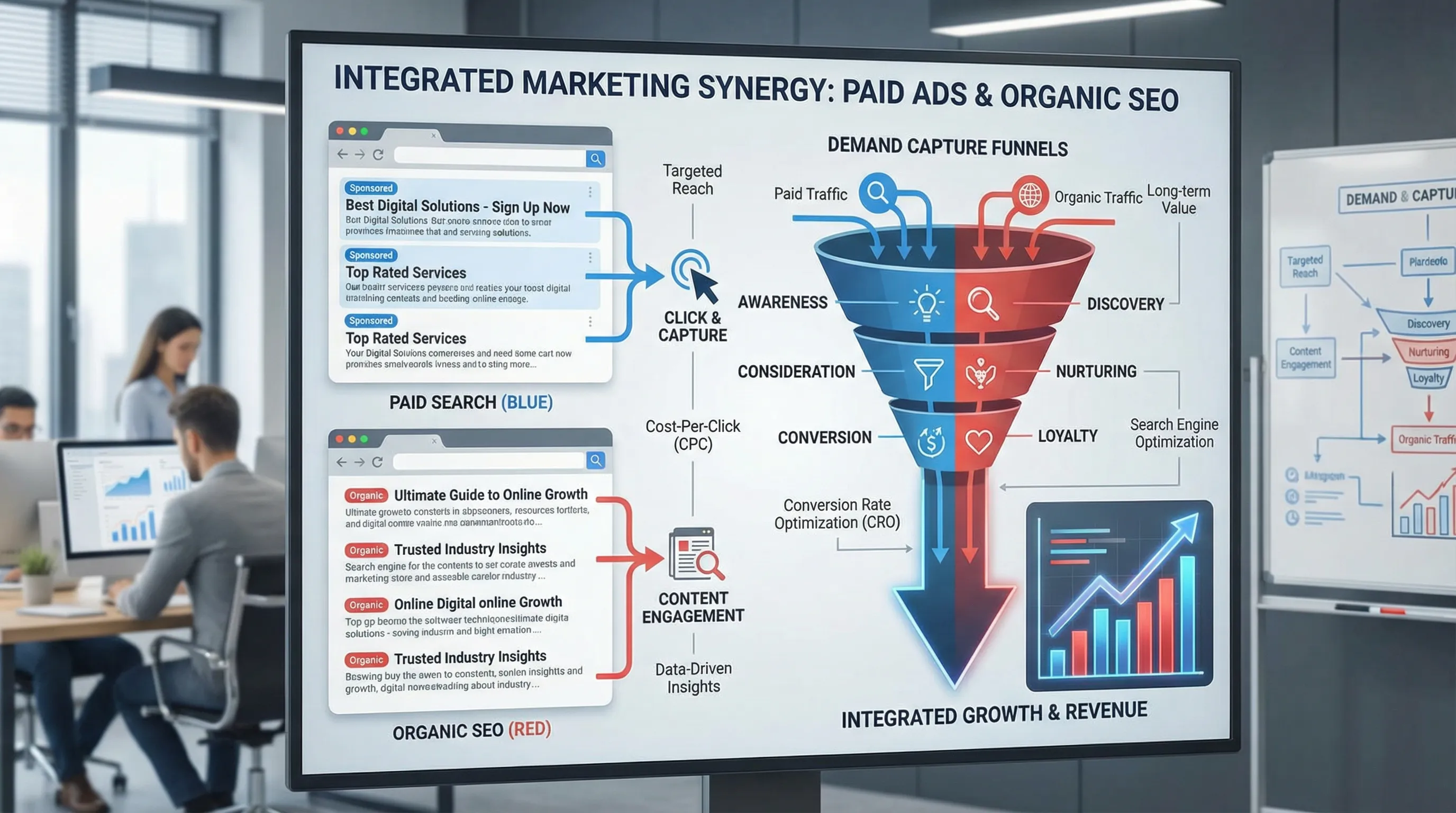
In 2026, businesses face increasing competition for attention across search engines, social platforms, and digital marketplaces. Ads and SEO are often managed separately, but when integrated strategically, they can capture demand more efficiently, increase conversions, and improve marketing ROI.
Integrated demand capture means aligning paid advertising campaigns with organic search efforts to target users at the right moment, maximize visibility, and reinforce messaging across channels.
This article explores the principles, strategies, and best practices for integrating Ads and SEO to capture demand effectively.
Understanding the Relationship Between Ads and SEO
Complementary Roles
SEO (Search Engine Optimization)
Builds long-term organic visibility
Targets users with intent-driven content
Enhances credibility and trust
Ads (Paid Search and Display)
Drives immediate traffic for specific keywords or campaigns
Enables precise targeting by demographics, location, and behavior
Allows experimentation with messaging and landing pages
When combined, SEO provides sustainable reach, while Ads accelerates traffic and conversions, creating a holistic demand capture strategy.
Synergies Between Channels
Keyword Insights: Ads campaigns can reveal high-performing keywords to optimize SEO content.
SERP Domination: Showing both paid and organic listings for the same query increases click-through rates and brand authority.
Audience Insights: Ads data reveals audience demographics, behaviors, and preferences to guide SEO content strategy.
Strategies for Integrated Demand Capture
1. Unified Keyword Strategy
Align paid and organic keyword targeting to avoid cannibalization and maximize coverage
Use SEO to target broad, high-intent informational queries
Use paid ads for high-value, transactional, or seasonal queries
Example:
SEO targets “best running shoes 2026” with blog content and product guides
Ads target “buy running shoes online” to capture ready-to-purchase users
2. Coordinated Landing Pages
Ensure consistency in messaging, design, and CTAs between Ads and organic search results
Optimize landing pages for speed, relevance, and conversion
Use dynamic content to serve different audiences while maintaining SEO-friendly structure
3. Shared Data and Analytics
Integrate SEO and Ads reporting for holistic performance measurement
Use insights from Ads (CTR, CPC, conversion rates) to refine SEO strategies
Leverage organic search performance to inform Ads bidding and targeting
4. Retargeting and Audience Layering
Retarget users who engage with organic content via paid channels
Use paid campaigns to capture high-value segments discovered through organic search data
Personalize content based on search intent and user journey stage
5. Seasonal and Promotional Alignment
Coordinate Ads and SEO content around product launches, sales events, or holidays
Ensure both channels support each other in capturing peak demand periods
Use Ads to boost visibility for new SEO content until organic rankings improve
Best Practices
Maintain a Centralized Strategy – Align SEO and Ads teams to share goals, data, and content calendars
Leverage Automation – Use tools to manage bidding, keyword updates, and performance alerts across channels
Prioritize High-Intent Queries – Focus resources on keywords with the highest conversion potential
Test Messaging Across Channels – Validate headlines, offers, and CTAs for both Ads and organic snippets
Monitor Overlap and Cannibalization – Avoid competing against your own brand for the same queries unnecessarily
Measure Incremental Lift – Track the combined effect of Ads and SEO on revenue, not just individual performance
Challenges and Considerations
Attribution Complexity – Determining whether conversions result from organic, paid, or combined efforts requires robust tracking
Budget Allocation – Balancing investment between SEO (long-term) and Ads (short-term) can be tricky
Content and Landing Page Consistency – Misalignment can confuse users and reduce conversion efficiency
Channel Silos – Teams working separately may miss opportunities for synergy and shared insights
Business Benefits
Higher Conversion Rates – Coordinated messaging and targeting improve the likelihood of purchase
Faster Time to Market – Paid campaigns amplify organic content performance during key periods
Improved ROI – Optimizing both channels together reduces wasted spend and increases efficiency
Enhanced Audience Insights – Shared data provides deeper understanding of user intent and behavior
Sustainable Growth – SEO builds long-term visibility while Ads capture immediate demand
Conclusion
Integrated demand capture through aligned Ads and SEO strategies is a powerful way to maximize visibility, drive traffic, and increase conversions in 2026. By sharing data, aligning keywords, coordinating landing pages, and leveraging audience insights, organizations can create a synergistic marketing ecosystem that delivers both immediate results and long-term growth.
Businesses that combine strategic planning, continuous optimization, and holistic measurement across paid and organic channels gain a competitive edge by capturing demand faster, more efficiently, and more sustainably.
Need help with your digital project?
Our team builds websites, mobile apps, e-commerce platforms and runs data-driven marketing campaigns for businesses across the UK.